


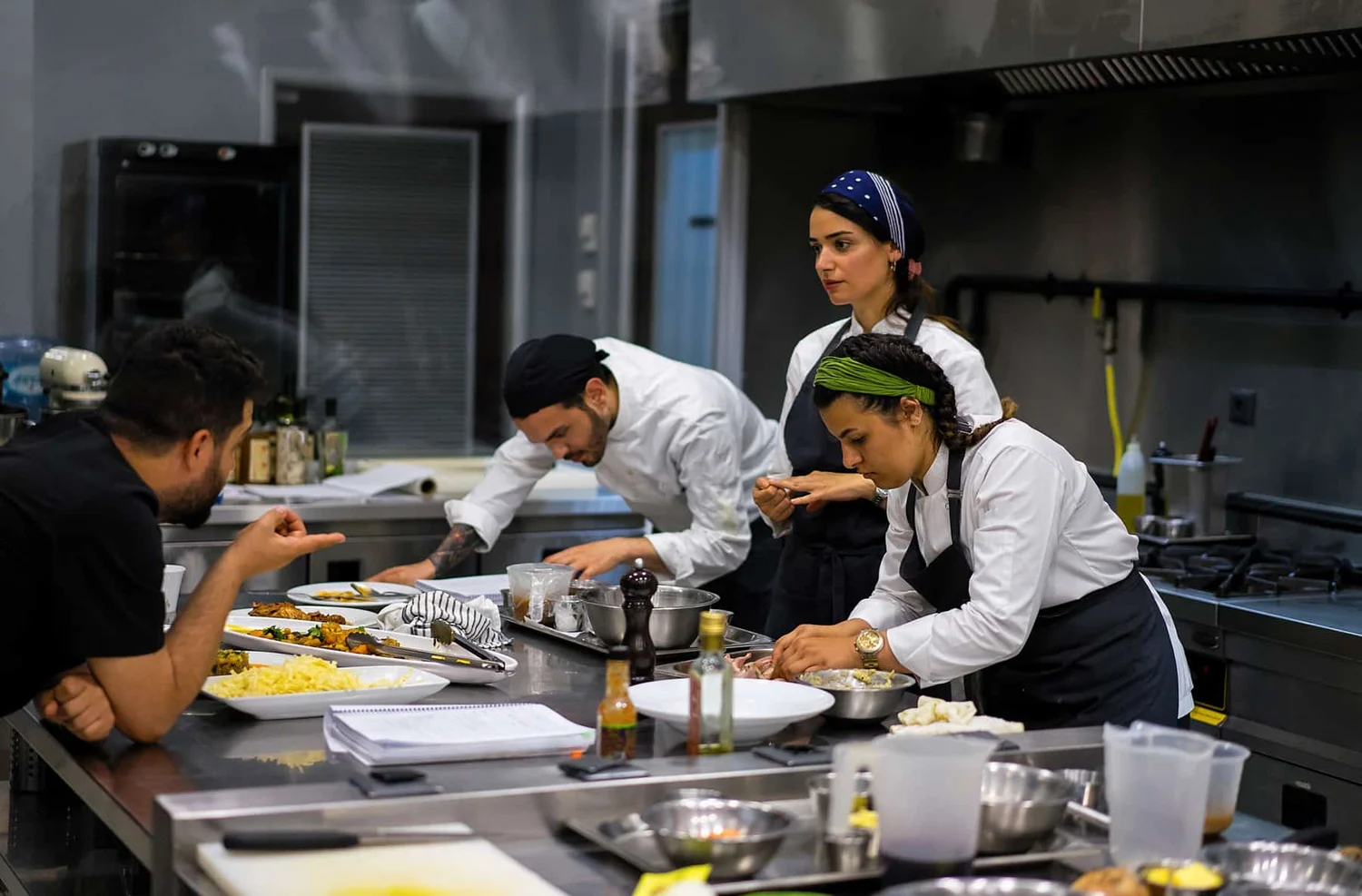
In industrial kitchens, advanced equipment, complex processes, and strict standards cannot operate efficiently without trained and skilled personnel. Human resource development and specialized training are key pillars of success and productivity in the food industry. This factor not only ensures product quality and safety but also reduces errors, optimizes processes, and creates a safe, organized working environment.
1. Importance of Skilled Personnel
No automation system or advanced equipment can function fully without competent human resources. Skilled personnel in industrial kitchens play several key roles:
- Proper execution of instructions and standards: Without sufficient knowledge, staff cannot correctly follow standardized procedures.
- Problem identification and operational troubleshooting: Experienced employees can quickly detect issues and prevent resource waste.
- Quality improvement and innovation: Trained staff can suggest practical improvements for processes and products.

2. Human Resource Development Planning
Developing human resources requires a systematic program, including:
- Identifying training needs: Assess current skills and knowledge and detect gaps.
- Defining training objectives: Specify the skills and knowledge required for proper process execution and standards compliance.
- Designing courses and workshops: Offer theoretical and practical training on hygiene, safety, food standards, time management, and technical equipment skills.
- Performance evaluation: Assess the effectiveness of training and measure staff competency in new skills.
3. Practical Specialized Training
Training in industrial kitchens should not be limited to theory. Practical training is the best way to develop real skills:
- Hands-on workshops: Direct practice with equipment, process execution, and production management under supervision.
- Simulating real scenarios: Create conditions similar to the actual work environment to practice decision-making and rapid response.
- Food safety and hygiene training: Proper washing, disinfection, contamination prevention, and use of protective equipment.
4. Continuous Training and Knowledge Updating
As the food industry and industrial kitchens continuously evolve, training must be ongoing:
- Update courses: Introduce new equipment technologies, quality management software, and updated procedures.
- Review sessions and feedback: Evaluate employee performance and provide feedback to improve processes.
- Encourage self-learning: Motivate staff to study and acquire new skills.
5. Performance Management and Motivation
Human resource development also includes performance management and motivation:
- Performance evaluation system: Set clear criteria to assess skills and work quality.
- Incentives and rewards: Recognize top-performing employees and encourage continuous improvement.
- Positive organizational culture: Foster a safe, respectful, and collaborative work environment.
6. Role of Training in Reducing Errors and Increasing Productivity
Specialized training helps minimize human errors, material waste, and equipment damage. Trained staff can:
- Execute operations faster and more accurately.
- Prevent quality and hygiene issues.
- Improve time management and production capacity.
7. Using Technology in Training
Modern training technologies, such as digital simulations, virtual reality, and educational software, play a key role in enhancing training effectiveness:
- Practice complex processes without halting real production.
- Offer interactive and engaging training experiences.
- Track and monitor each employee’s training progress.
8. Developing Managerial and Leadership Skills
Management staff in industrial kitchens also need skill development:
- Team management: Lead diverse teams and coordinate between departments.
- Problem-solving and decision-making: Respond quickly to production, quality, or safety issues.
- Planning and process optimization: Improve productivity and reduce waste through precise resource planning.
9. Benefits of Human Resource Development and Specialized Training
Implementing a structured human resource development and specialized training program provides tangible and strategic benefits:
- Improved product quality and customer satisfaction.
- Reduced errors, waste, and operational costs.
- Increased productivity and optimized time and resources.
- Enhanced employee motivation and loyalty.
- Better preparedness for international standards and food safety regulations.
Conclusion
Human resource development and specialized training are the foundation of success in industrial kitchens. With precise planning, practical and continuous training, use of modern technologies, and fostering a culture of quality and motivation, professional and capable staff can be cultivated. This not only ensures food safety and quality but also boosts productivity, reduces waste, and supports sustainable growth in the food industry.