

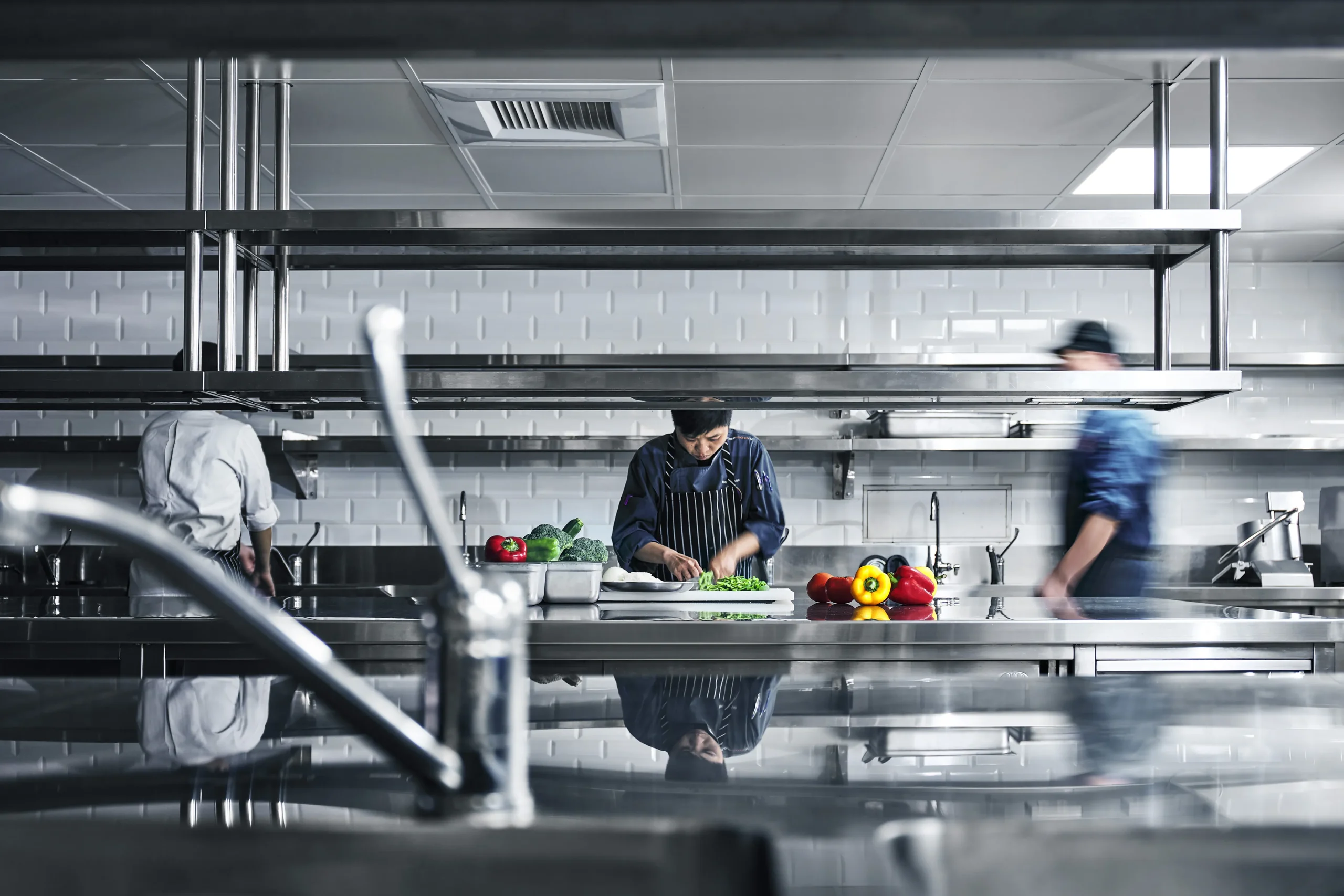
The food industry is one of the most complex and challenging economic sectors, where success requires a combination of technical knowledge, market analysis, process engineering, and intelligent project management. From the initial idea to the implementation of a food production plant or the establishment of a smart industrial kitchen, every stage demands data-driven decision-making, expert consulting, and smart design. Today, successful projects in the food industry not only rely on high-quality, standardized production but also create added value through advanced engineering, innovative technologies, and market analysis.
Stage 1: Idea Formation and Feasibility Analysis
Every successful project begins with an idea that considers market needs, economic opportunities, and operational capacity. Feasibility studies evaluate several factors:
- Market and customer analysis: Identifying demand, consumption trends, food preferences, and growth potential to determine product type and production capacity.
- Competitor and industry analysis: Understanding competitors and their strengths and weaknesses to define competitive strategies and unique advantages.
- Resource and infrastructure assessment: Ensuring that raw materials, logistics, equipment, and workforce are sufficient for operational feasibility.
The goal is to create a comprehensive and realistic picture of the project, highlighting strengths and challenges. Key decisions based on precise data and analysis pave the way for success.
Stage 2: Expert Consulting and Strategic Design
Once feasibility is confirmed, the project enters expert consulting and strategic design. Specialists use practical experience, engineering knowledge, international standards, and modern technologies to guide the project’s design and implementation:
- Production process design: Optimizing workflows from raw material intake to final product output and reducing waste.
- Selection of modern equipment and technologies: Ensuring equipment meets production capacity and hygiene and safety standards while enabling smart process control.
- Efficiency and cost-reduction strategies: Designing production lines and support processes to optimize energy, time, and human resources.
- Safety and quality consulting: Ensuring compliance with HACCP, ISO, and other international standards to minimize risks and increase customer confidence.
Strategic design not only addresses technical aspects but also enables smart decision-making for resource management, investment, and long-term development.
Stage 3: Smart Project Design
Success in the food industry today relies on digital and smart design, including 3D modeling, process simulation, information management, and intelligent equipment control:
- Process simulation: Predicting production flow, bottlenecks, and line capacities to make optimal decisions before actual investment.
- Workspace and layout optimization: Designing production, storage, packaging, and maintenance areas according to ergonomics, safety, and energy efficiency.
- Smart management systems: Software for production control, quality monitoring, and inventory management enables fast, accurate decision-making.
- Predictive maintenance: Smart systems anticipate equipment failures and minimize production downtime.
This approach increases productivity while making the project operationally and economically resilient and reliable.
Stage 4: Data-Driven Decision-Making
A key differentiator of successful food industry projects is data-driven decision-making. Information from previous stages, simulations, market analysis, and equipment performance allows managers to make strategic and operational decisions with minimal risk and maximum return:
- Technology and equipment selection: Choosing the best equipment based on capacity, cost, quality, and flexibility.
- Risk management: Identifying and evaluating health, safety, financial, and market risks and implementing mitigation strategies.
- Investment and development decisions: Prioritizing tasks, scheduling projects, and allocating capital.
- Operational planning and execution: Translating strategic decisions into actionable plans with quality and productivity indicators.
Data-driven decisions ensure projects are executed according to standards and remain economically optimized and profitable.
Stage 5: Project Execution and Continuous Optimization
After design and decision-making, project execution begins, including equipment installation, staff training, system implementation, and production line start-up:
- Equipment installation: Following precise engineering designs and safety and hygiene standards.
- Staff training: Practical training for optimal operation and adherence to safety and hygiene protocols.
- Process monitoring and optimization: Using real production data to identify bottlenecks and improve workflows.
- Feedback and system upgrades: Implementing necessary changes to improve quality, reduce waste, and increase efficiency.
This stage demonstrates the importance of integrating engineering, management, and smart technology to ensure the project not only becomes operational but also evolves and scales over time.
Conclusion
Food industry projects, from initial concept to final operation, require a comprehensive, systematic, and intelligent approach. From feasibility studies and expert consulting to smart design and data-driven decision-making, every step plays a critical role in project success.
The benefits of this approach include:
- Reduced financial, operational, and health risks
- Increased productivity, quality, and production consistency
- Use of modern technologies and intelligent systems
- Optimal management of human and energy resources
- Potential for future project growth and expansion
A well-designed and intelligently managed project not only achieves higher economic returns but also complies with international safety, hygiene, and quality standards, laying a strong foundation for long-term success in the food industry.